
By Dubya Garage Doors | April 12, 2026 | 8 min read
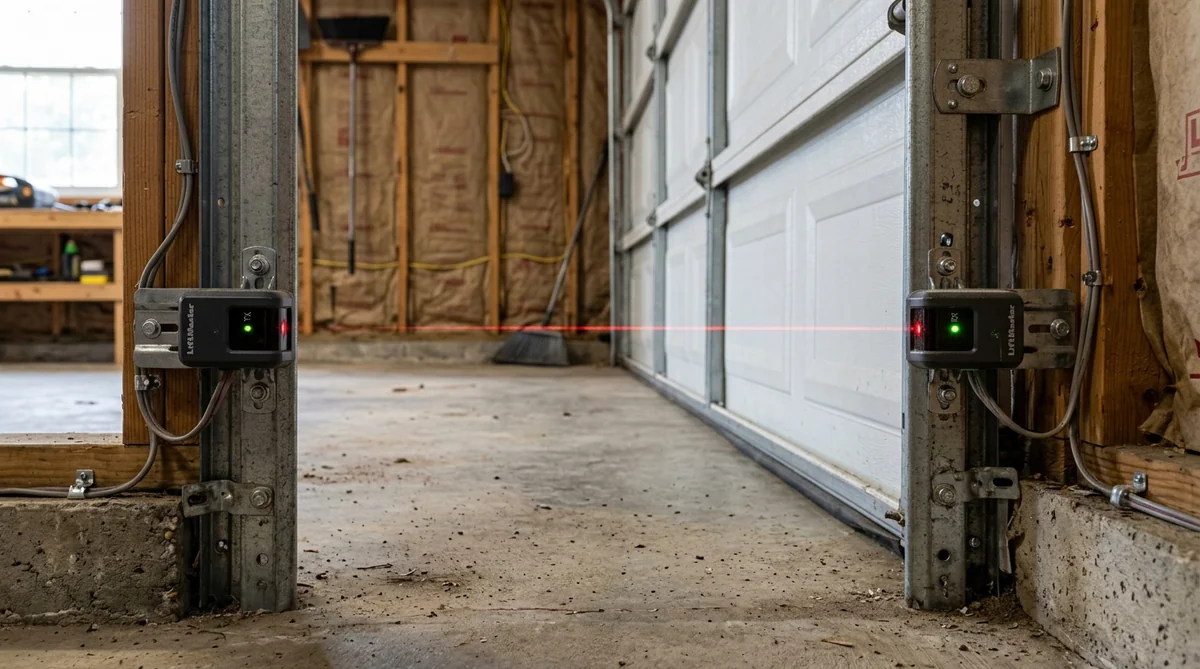
Garage door sensor problems in Neeses, SC typically stem from misalignment, dirty lenses, or wiring issues, causing your door to reverse when closing or fail to close at all. Most sensor issues can be diagnosed and resolved within minutes through simple troubleshooting steps, though professional same-day repair is available when needed.
Garage door safety sensors use an invisible infrared beam between two units mounted on either side of your door track to detect obstructions. When this beam is broken—whether by a person, pet, or object—the door automatically reverses to prevent injury or damage. This critical safety feature has been federally mandated on all garage door openers manufactured since 1993, making them standard in homes throughout Neeses and Orangeburg County. Understanding how these sensors function is the first step in diagnosing why your garage door won't close properly or keeps reversing unexpectedly.
The most obvious sign of sensor problems is when your garage door refuses to close or immediately reverses after attempting to close. You may also notice the opener lights blinking a specific number of times—typically 10 blinks on most models—indicating a sensor error. Other telltale symptoms include the door closing only when you hold down the wall button continuously, one or both sensor lights being off or displaying the wrong color (most sensors show solid green when properly aligned), or the door working intermittently depending on time of day or weather conditions. Neeses homeowners often experience sensor issues during humid summer months or after severe thunderstorms common to Orangeburg County, as moisture and debris can interfere with the sensor beam.
Begin troubleshooting by inspecting both sensor units for obvious obstructions, dirt, or debris on the lenses. Use a clean, soft cloth to gently wipe each sensor lens, removing any dust, spider webs, or residue that may have accumulated. Next, check the sensor alignment by examining whether both units are facing directly at each other—even a slight bump from a vehicle, lawn equipment, or children's toys can knock sensors out of position. The indicator lights should be solid (not flickering) when properly aligned; if they're blinking or off, carefully adjust the sensor brackets until both lights become steady.
Inspect the sensor wiring running from each unit back to the opener motor, looking for frayed wires, loose connections, or damage from pests—particularly common in rural areas of Neeses where mice and squirrels may nest in garages. Ensure all wire connections are secure at both the sensors and the opener terminal. If you've recently painted your garage or performed maintenance, check that no paint or debris has gotten onto the sensor lenses or mounting brackets.
If basic cleaning and alignment don't resolve the issue, or if you're uncomfortable working with electrical components, contact Dubya Garage Doors at (803) 855-1981 for same-day repair service in Neeses and throughout Orangeburg County.
Misaligned sensors account for approximately 70% of all garage door sensor problems in residential settings. Even a quarter-inch shift in sensor position can break the infrared beam and prevent your door from closing. To properly align your sensors, loosen the wing nuts or screws holding each sensor bracket in place, then adjust the sensor angle while watching the indicator lights. When both sensors display solid lights (usually green), tighten the mounting hardware firmly to prevent future movement. The sensors should be positioned approximately four to six inches above the garage floor and directly facing each other across the door opening. Some homeowners in Neeses find it helpful to use a string line stretched across the garage opening at sensor height to ensure both units are at exactly the same level.
While many sensor issues can be resolved through DIY troubleshooting, certain problems require professional expertise and equipment. If you've cleaned, aligned, and checked all wiring but your sensors still malfunction, the issue may involve faulty sensor units, problems with the opener's circuit board, or complex wiring issues within your walls. Sensors that have sustained physical damage, show signs of corrosion from moisture exposure, or are more than 10-15 years old often need replacement rather than adjustment.
Dubya Garage Doors specializes in same-day sensor repair and replacement throughout Neeses and Orangeburg County, with technicians equipped to diagnose problems quickly and carry common replacement parts on their service vehicles. We also offer installations of modern smart garage door openers with battery backup—an invaluable feature during the power outages that occasionally affect rural areas of Neeses during summer storms. These advanced systems include enhanced sensor technology with self-diagnostic features that alert you to potential problems before complete failure occurs.
Orangeburg County's humid subtropical climate presents unique challenges for garage door sensors, with high humidity, temperature fluctuations, and seasonal storms all contributing to sensor issues. Protect your sensors by regularly cleaning the lenses every 2-3 months, checking alignment quarterly, and ensuring your garage has adequate ventilation to reduce moisture buildup. Consider installing sensor guards or shields if your garage is prone to flooding during heavy rains or if you frequently move large items in and out that might bump the sensors.
Keep the area around your sensors clear of stored items, garden tools, and vehicle parking patterns that might cause accidental impacts. Inspect sensor wiring annually for signs of pest damage or wear, particularly where wires run along baseboards or through wall cavities. During your seasonal maintenance routine—ideally in spring and fall—test your sensors by placing an object in the door's path to confirm the safety reversal feature functions correctly. Taking these preventive steps will extend sensor life and reduce the likelihood of your garage door failing to close when you need it most.
This indicates your safety sensors are not detecting a clear beam between them, triggering the opener's safety mode. By holding the wall button continuously, you're overriding the sensor safety feature, which should only be temporary until sensors are properly aligned or repaired. This is a safety concern that should be addressed promptly.
Yes, direct sunlight—especially during late afternoon hours—can overwhelm the infrared sensor receiver and cause malfunction. This is particularly common in Neeses garages with west-facing doors during summer months. Installing sun shields on the sensors or adjusting their angle slightly downward typically resolves this issue.
Professional sensor replacement typically costs between $150-$250 for parts and labor, depending on your opener model and sensor type. Dubya Garage Doors provides upfront pricing and same-day service throughout Neeses and Orangeburg County. Many sensor issues can be resolved through alignment or cleaning at a lower service call cost.
Quality garage door sensors generally last 10-15 years with proper maintenance and protection from physical damage. Sensors in Neeses may experience shorter lifespans if exposed to excessive moisture, direct weather elements, or frequent temperature fluctuations. Regular cleaning and inspection help maximize sensor longevity.
The door will operate in the open direction but will not close using the remote or wall button with sensors disconnected, as this defeats the federally mandated safety feature. You can only close the door by holding the wall button continuously, which is not recommended except in emergencies. Proper sensor function is essential for safe garage door operation.
Published April 12, 2026 | Dubya Garage Doors serves Orangeburg, Cordova, North, Rowesville, Cameron, and all of Orangeburg County, SC.
Rowesville, Orangeburg, Santee, Bamberg, Denmark, Cameron, St. George, Holly Hill, St. Matthews, Walterboro, Manning, Branchville, Summerville, Sumter, Moncks Corner, and surrounding SC communities.
View All Service Areas